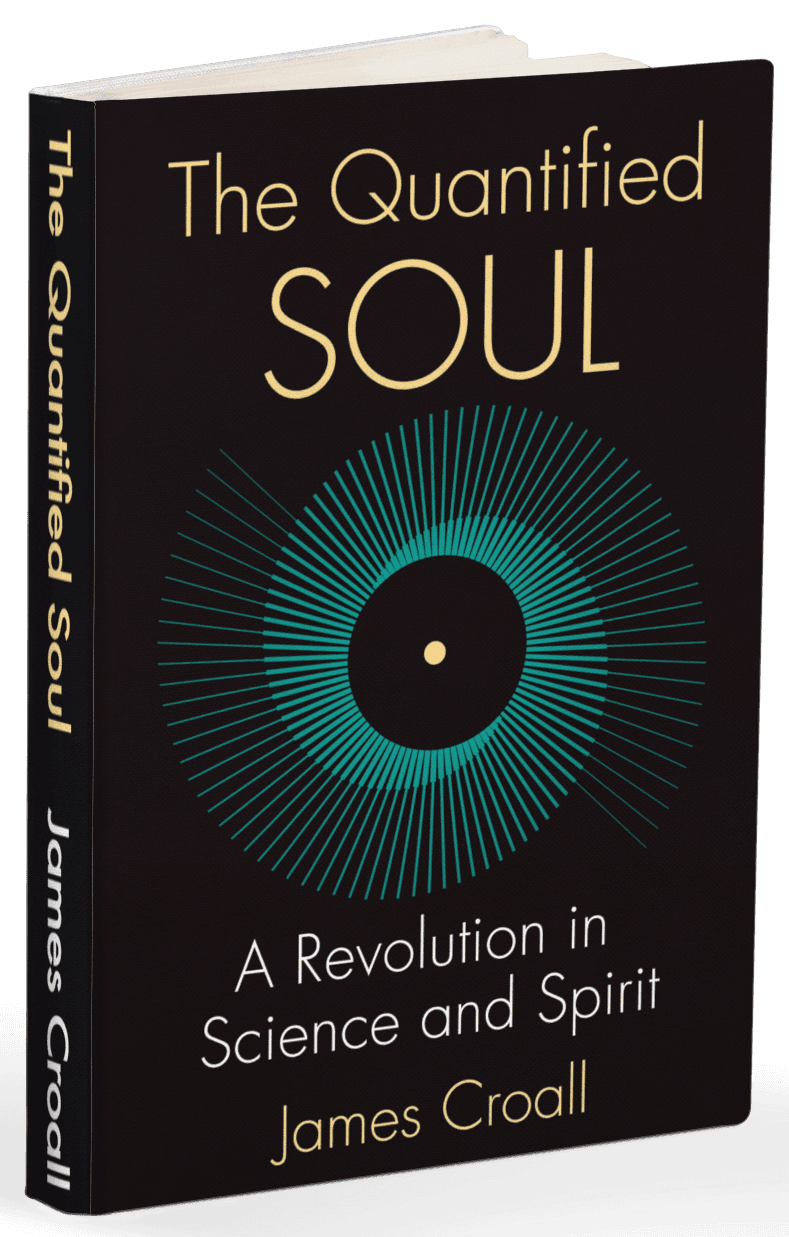
THE BOOK
The Quantified Soul
The problems we can't solve—political, ecological, personal—aren't failures of knowledge. They're failures of coherence. When minds can't hold together under pressure, neither can anything we build with them. This book is about why that's happening, what's underneath it, and what it would take to think together again.
THE PREMISE
We are living through a crisis of coherence.
Anxiety is epidemic. Trust is collapsing. We can barely hold a shared conversation about anything that matters—and the harder we try, the worse it seems to get.
The Quantified Soul starts from a simple premise: inner experience is not formless. It has structure. Attention, emotion, meaning, and regulation interact in patterned ways. When those patterns are understood, thinking becomes more stable. When they're ignored, even intelligent people struggle to think clearly — especially together.
This book traces that structure across neuroscience, mathematics, psychology, and philosophy — not to reduce inner life to metrics, but to take it seriously enough to study.
01
What is the soul — and why did we stop asking?
What if the soul isn't a metaphor or a mystery — but something structured enough to study? And what happens to a culture that loses the question entirely?
02
Why smart people still can't think clearly
Thought has structure — not just content. Change the structure and the meaning follows. This is why effort alone doesn't fix how your mind works under pressure.
03
The selves inside you — and who's in charge
Jung's archetypes, the shadow, individuation — reframed as structural dynamics, not metaphor. Why you sometimes feel like a different person, and what integration actually looks like.
04
What happens when minds learn to hear each other
From love and relationship to how societies reason together — coherence doesn't stop at the individual. Neither does fragmentation.
THE ARC
What you'll find inside.
INSIDE THE BOOK
Twelve chapters. One through-line.
KEY IDEAS
The framework in brief.
Coherence
The ability of parts to hold together as a whole — not by becoming identical, but by remaining in relationship. Coherence is structural, not moral. More coherent does not mean better as a person.
Constraint
What narrows possibility into form. Not limitation, but the condition of appearance. Without constraint, nothing specific can exist. Every structure is a pattern of constraints.
Syntax vs. Semantics
The structure of thought versus its content. Change the syntax — how thinking is organized — and the semantics follows. You don't have to fix every thought. You change the conditions that shape thinking.
Soul / Mind / Monad
Three words for the same thing, seen from different angles. Soul is its structure. Mind is its motion. Monad is its indivisible unity. You don't have a soul — you are one.
This book is for people who sense that science and meaning have been talking past each other.
Who want rigor without reduction.
Who are tired of frameworks that explain everything except the person using them.
It asks to be tested, not adopted.
If reading about structure makes you want to work with it directly, there's a place for that.
Read the first chapter.
Chapter 1 — "Have You Seen Your Soul Lately?" — starts here, free and unabridged. Enter your email to unlock the full chapter.